Case 13: Voice-Controlled Forklift
Case Introduction
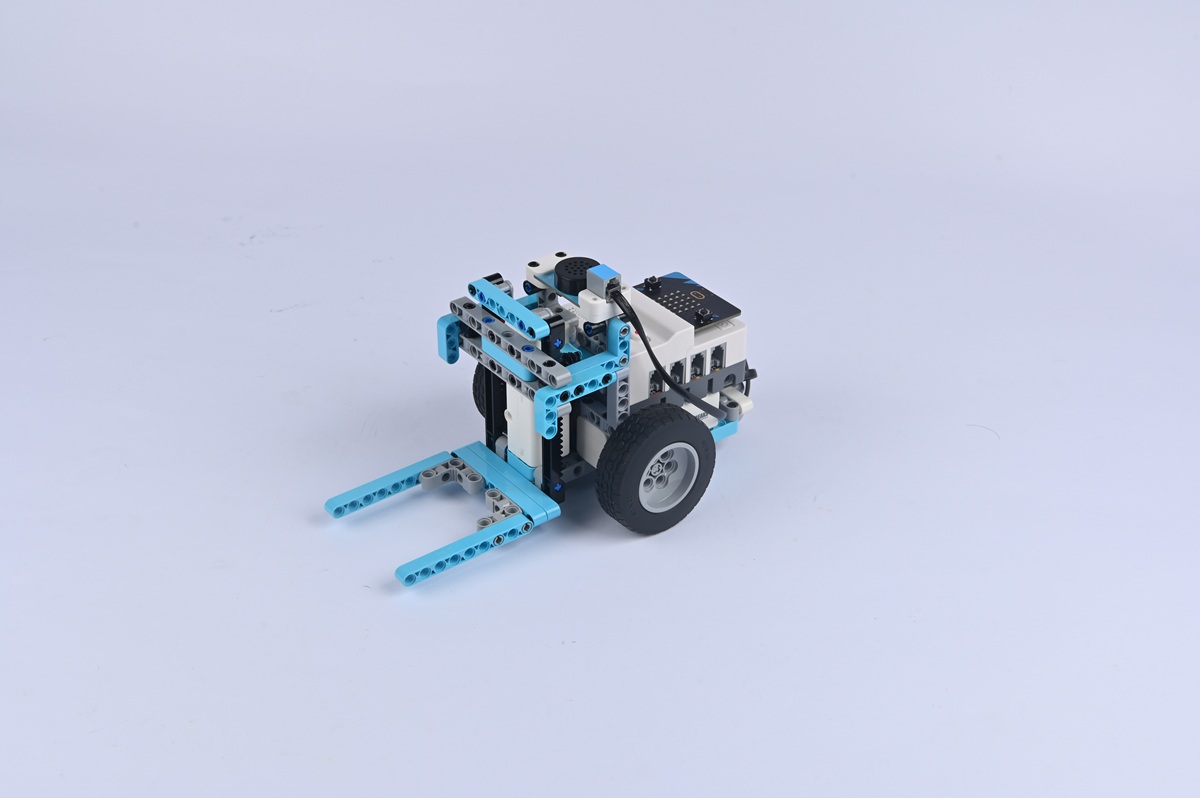
Build a voice-controlled forklift, and control the forklift's movement as well as the lifting and lowering of its forks through voice commands.
Teaching Preparation
| Name | Illustration |
|---|---|
| Nezha Pro AI Mechanical Power Kit | 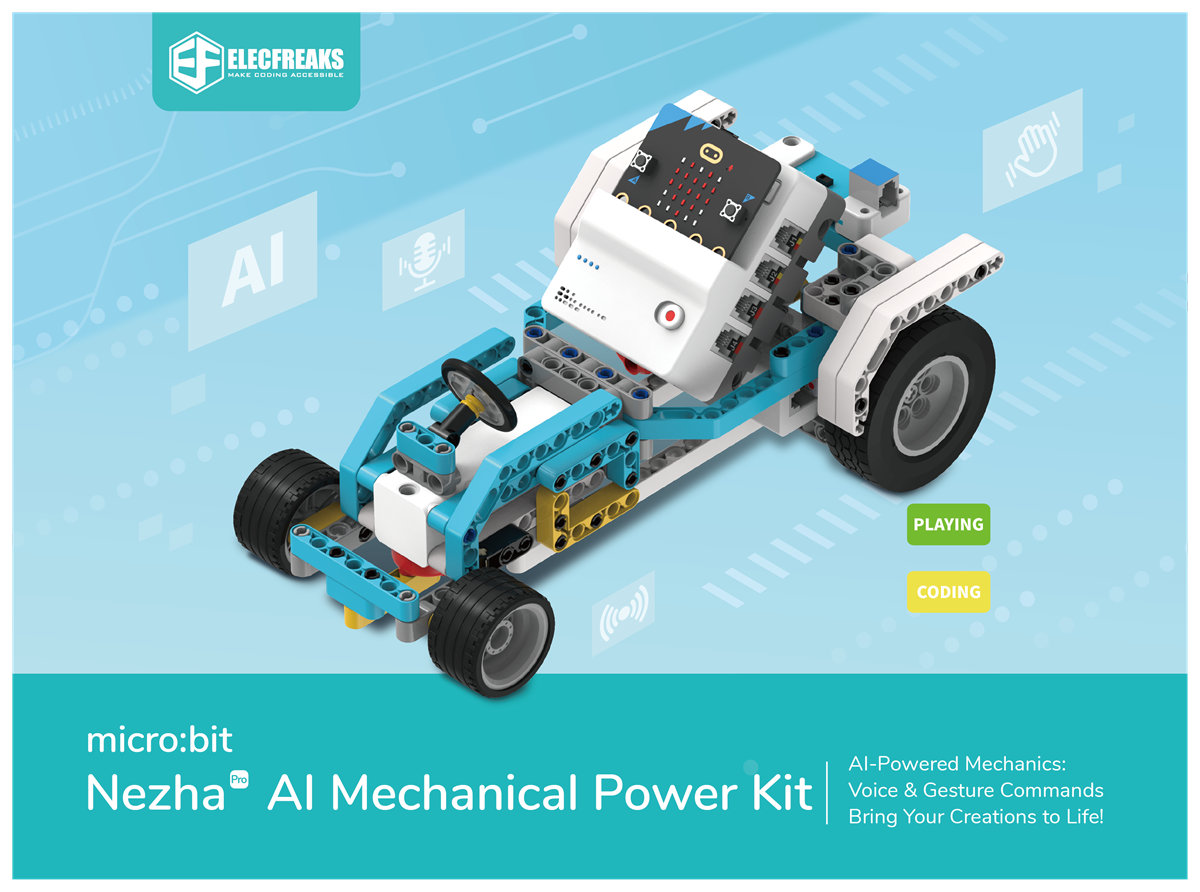 |
Teaching Objectives
- Complete the assembly of the voice-controlled forklift, master the assembly and connection methods of the forklift chassis, fork lifting mechanism, and voice recognition sensor, and realize the control of the forklift's forward movement, backward movement, and fork lifting/lowering through voice commands.
- Understand the collaboration principle between the voice recognition sensor and motors (controlling the chassis and forks), and learn to program to associate specific voice commands (e.g., "forklift forward", "fork up") with the forklift's actions.
- During the process of debugging the fork lifting height and voice recognition distance, cultivate hands-on ability, programming logic, and problem-solving ability, and learn to solve problems such as stuck fork lifting and delayed response to voice commands.
- Stimulate interest in industrial intelligent equipment, perceive the application potential of "voice control" in logistics scenarios, and establish the cognition that "technology improves logistics efficiency".
Story Introduction
Upon arriving outside the core equipment room, everyone found that the door was blocked by a heavy alloy plate. "'Dalisheng (Hercules)' Forklift can move it!" the guard robot shouted. "But it only recognizes voice commands—now it’s like a deaf machine!" The children tried speaking to the forklift’s microphone: "Start!" The forklift didn’t respond at all. Aji adjusted the voice module: "It needs clear commands, just like a soldier following orders. Try saying 'lift the forks'."
Learning Exploration
- Which component (e.g., motor, servo) does the forklift's fork lifting rely on? How to control the lifting height of the forks through voice commands?
- Try setting "sequential commands" (e.g., "forklift forward → fork up → forklift backward"). How to ensure actions are executed in order without confusion during programming?
- If the forklift moves while executing the "fork up" command, what might be the causes? (e.g., conflicting action logic in programming, false recognition by the sensor)
- Compare the operation methods of real forklifts and the model—how do operators of real forklifts control the forks? What problems can voice-controlled forklifts solve in logistics warehouses (e.g., reducing the operator’s control steps)?