Case 15: Voice-Controlled Transport Vehicle
Case Introduction
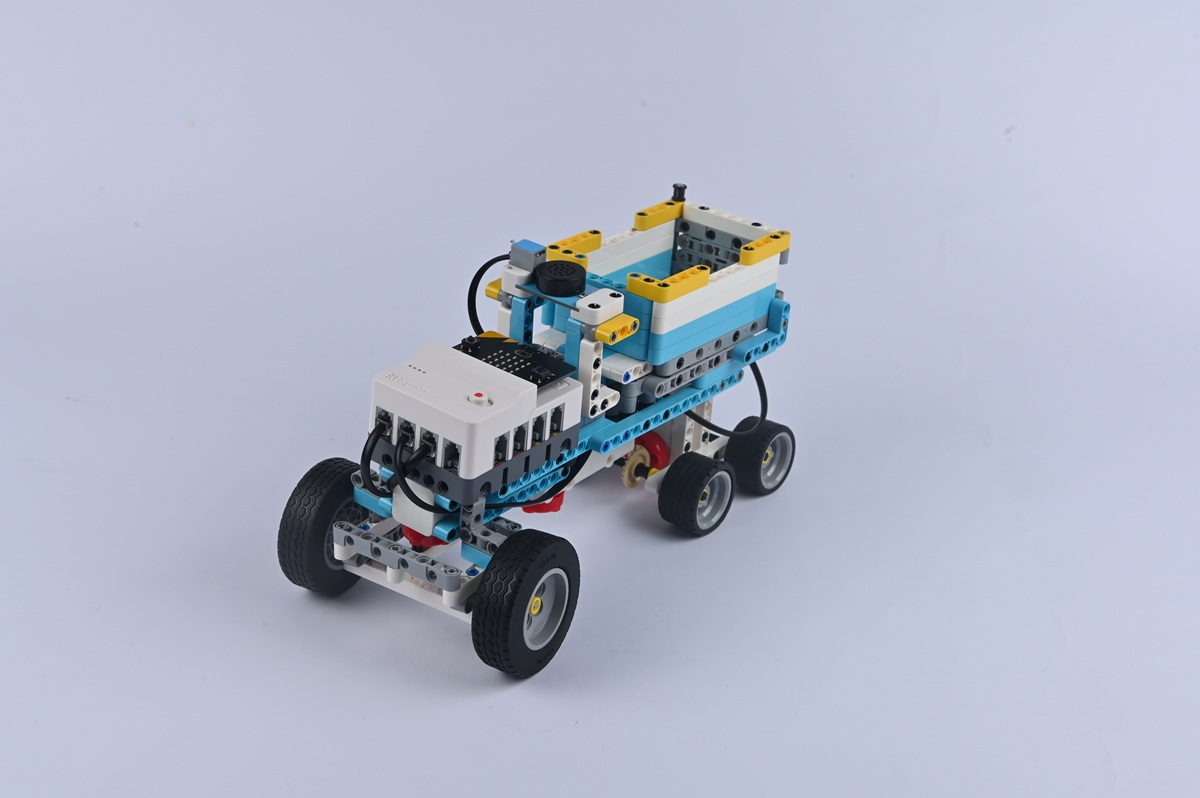
Build a voice-controlled transport vehicle, and control the vehicle's movement direction as well as the lifting and lowering of its cargo bed through voice commands.
Teaching Preparation
| Name | Illustration |
|---|---|
| Nezha Pro AI Mechanical Power Kit | 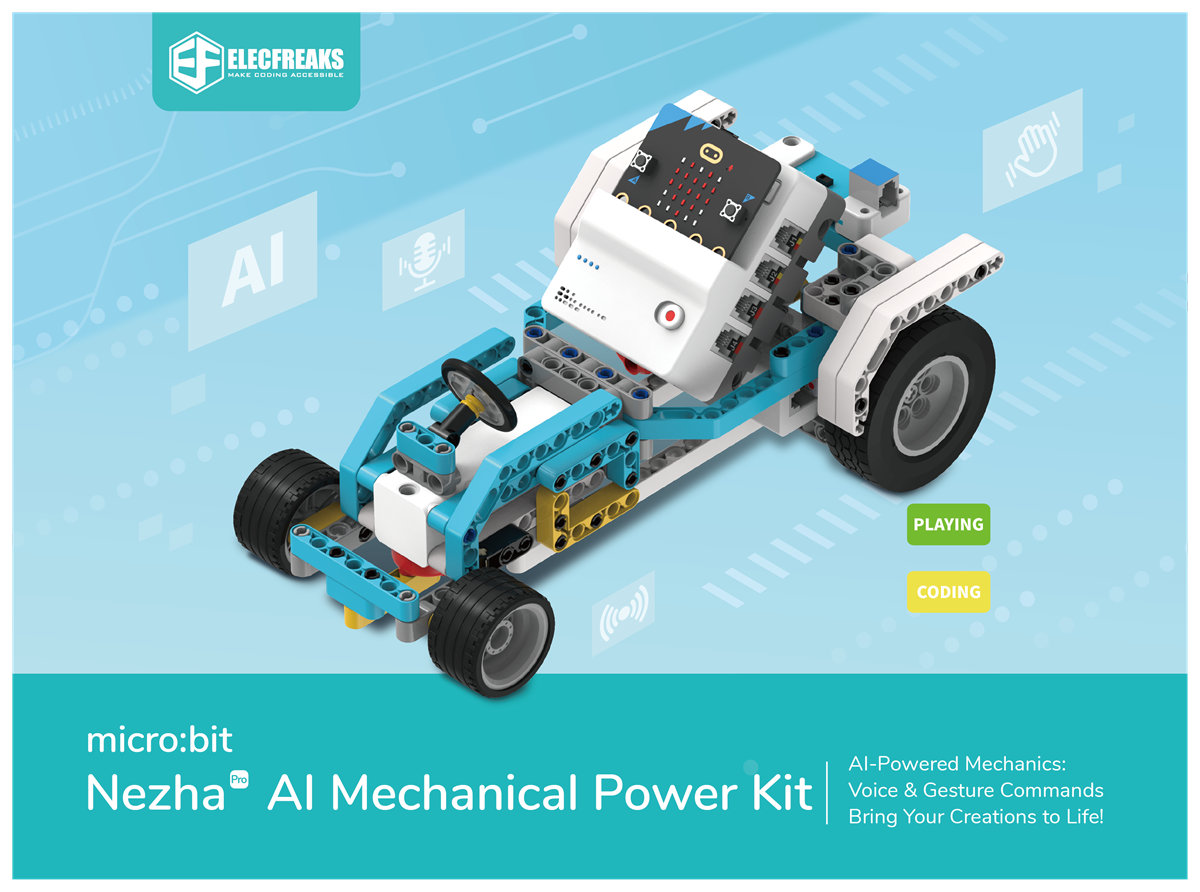 |
Teaching Objectives
- Complete the assembly of the voice-controlled transport vehicle, master the assembly and connection methods of the vehicle chassis, cargo platform, and voice recognition sensor, and realize the control of the vehicle's forward movement, backward movement, turning, and stopping through voice commands.
- Understand the collaboration principle between the voice recognition sensor and motors (controlling the chassis), and learn to program to associate specific voice commands (e.g., "transport vehicle forward", "transport vehicle turn left") with the vehicle's movement states.
- During the process of debugging the vehicle's movement direction and voice command response speed, cultivate hands-on ability, programming logic, and problem-solving ability, and learn to solve problems such as the vehicle deviating from the path and no response to voice commands.
- Stimulate interest in intelligent handling equipment, perceive the application of "voice control" in transportation scenarios, and establish the cognition that "technology simplifies handling work".
Story Introduction
After the lights turned on, everyone saw scattered parts next to the core server. "We need to transport these parts to the maintenance table," the system engineer pointed to the transport vehicle in the corner. "Little Train can move by recognizing voice commands, but now it won’t move at all." The children tried saying, "Move forward!" The vehicle’s wheels turned slightly. "Great!" Aji clapped. "Try saying 'turn left' next to make it stop accurately in front of the maintenance table."
Learning Exploration
- Which motor needs to be controlled for the "turning" action of the transport vehicle?
- Try placing "simulated cargo" (e.g., small building blocks) on the transport vehicle. When controlling the vehicle to move via voice commands, does the cargo easily fall off? How to optimize the cargo platform (e.g., adding rails) or adjust the movement speed to prevent falling?
- If the transport vehicle deviates from the direction when executing the "move backward" command, what might be the causes?
- Compare the voice-controlled transport vehicle with real logistics transport vehicles (e.g., express sorting vehicles). How do real transport vehicles achieve "precision transportation"? (Hint: Refer to GPS and visual navigation)