Case 1: Simple Quadruped Robot
Case Introduction
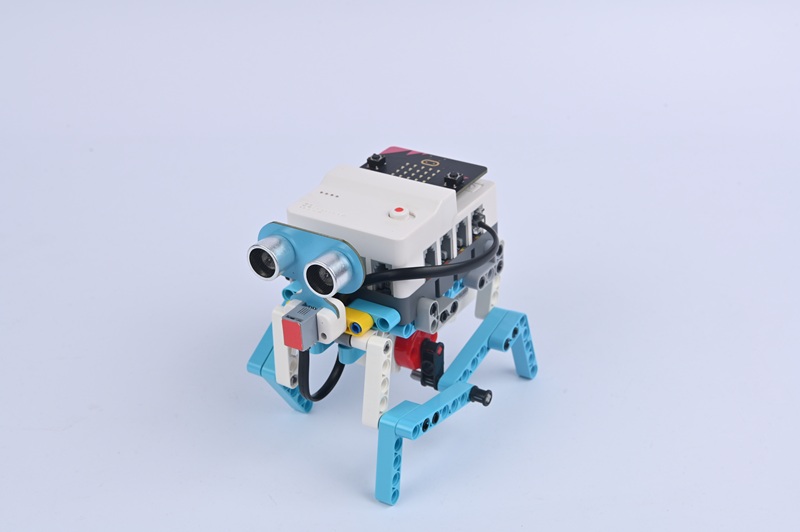
Build a simple quadruped robot. Through a basic linkage mechanism, realize the walking movement of the simple quadruped robot.
Teaching Preparation
| Name | Illustration |
|---|---|
| Nezha Pro AI Mechanical Power Kit | 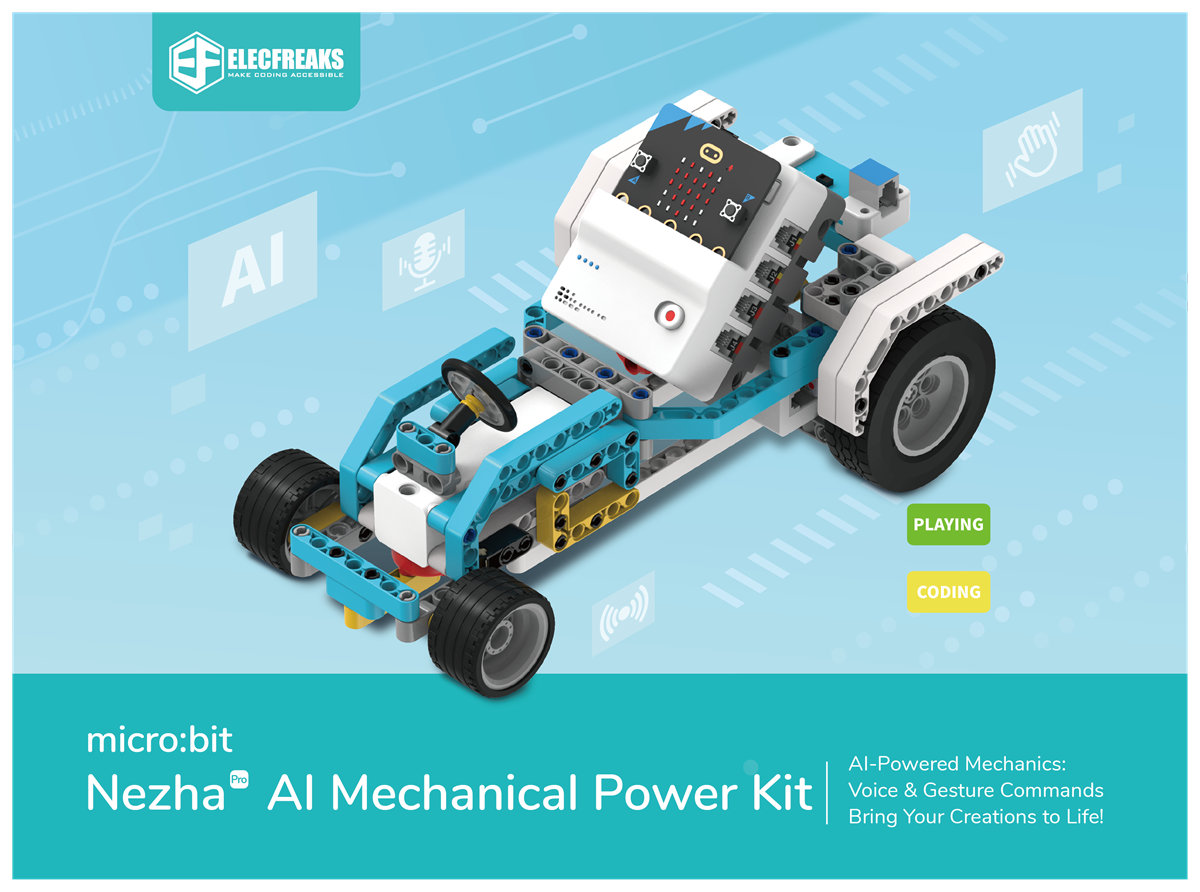 |
Teaching Objectives
- Complete the assembly of the simple quadruped robot, master the assembly method of the linkage mechanism, correctly connect the motor and ultrasonic sensor, and understand the cooperative relationship between various components.
- Develop a preliminary understanding of the movement principle of the linkage mechanism, learn about the functions of the ultrasonic sensor (e.g., distance detection), and master the method of controlling the flexion and extension of the robot's legs through the motor.
- During the process of debugging the robot's walking and sensor detection, cultivate hands-on practical ability, observation and analysis ability, and problem-solving ability (e.g., adjusting the length of the linkage to optimize the walking posture).
- Stimulate interest in bionic robots, perceive the connection between mechanical structures and biological movements, and establish a preliminary understanding of "technology imitating nature".
Story Introduction
"Ding ——" The alarm of the miniature teleportation pod woke up the young engineers in their sleep. A holographic image suddenly popped up on the screen: the village chief of the Robot Village was stamping his feet anxiously, and the metal ground under his feet was covered with cracks. "Help us!" The chief's voice was mixed with current noise. "After the core system crashed, even the most basic patrol robots are out of action. The gear beasts in the forest are going to break into the village!" Following the holographic map, the children arrived at the village entrance, only to see the quadruped robot "Tiedan" lying on the ground, with all the linkages of its four legs loose. "We must get Tiedan to stand up first!"
Learning Exploration
- How many sets of linkages make up the legs of the quadruped robot? How does adjusting the length or angle of the linkages affect the robot's walking posture (e.g., stride length, stability)?
- What is the function of the ultrasonic sensor on the robot? How to use the sensor to help the robot avoid obstacles ahead? Try changing the detection distance of the sensor and observe the robot's response.
- Does the rotation speed of the motor affect the walking speed of the robot? If the robot has a "limp" (one leg not moving), what might be the causes? (Analyze from the perspectives of linkage connection, motor wiring, etc.)
- Compare the walking methods of the quadruped robot and real quadruped animals (e.g., cats, dogs). What are the similarities and differences in their leg movements?