Sound Sensor(EF05003)
Introduction
Sound Sensor is particularly sensitive to sound intensity, and it can be used to detect ambient sound level.

Products Link
ELECFREAKS PlanetX Noise Sensor
Characteristic
Designed in RJ11 connections, easy to plug.
Specification
| Item | Parameter |
|---|---|
| SKU | EF05003 |
| Connection | RJ11 |
| Type of Connection | Analog output |
| Working Voltage | 3.3V |
| Size | 55.8 x 23.8 mm |
Outlook

Quick to Start
Materials Required and Diagram
Connect the sound sensor to J1 port and the OLED module to IIC port in the Nezha expansion board as the picture shows.

MakeCode Programming
Step 1
Click "Advanced" in the MakeCode drawer to see more choices.
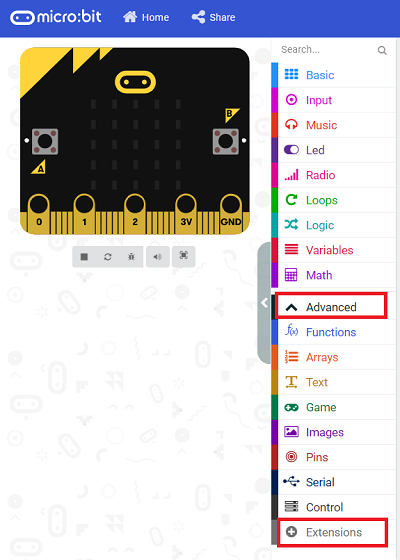
We need to add a package for programming, . Click "Extensions" in the bottom of the drawer and search with "PlanetX" in the dialogue box to download it.
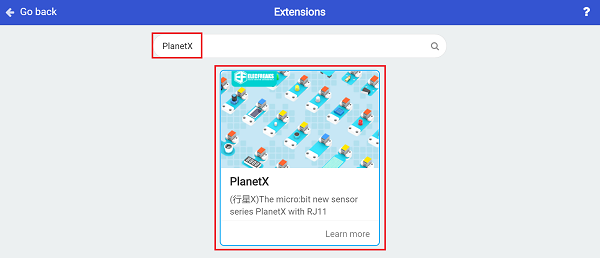
Note: If you met a tip indicating that the codebase will be deleted due to incompatibility, you may continue as the tips say or build a new project in the menu.
Step 2
Code as below:

Link
Link: https://makecode.microbit.org/_Vr4PPtfefeWw
You may also download it directly below:
Result
The value of the sound(dB) in the current environment displays on the OLED module.
Python Programming
Step 1
Download the package and unzip it: PlanetX_MicroPython
Go to Python editor

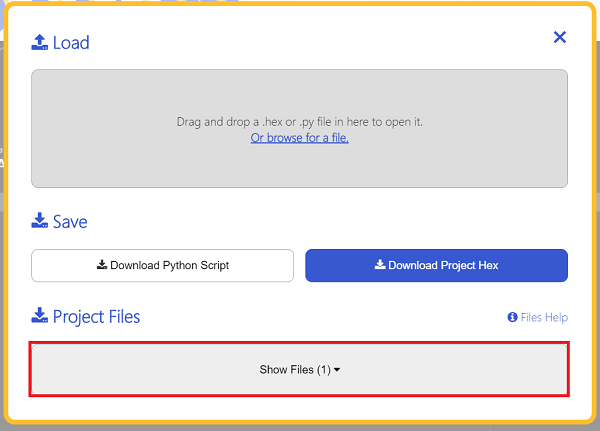
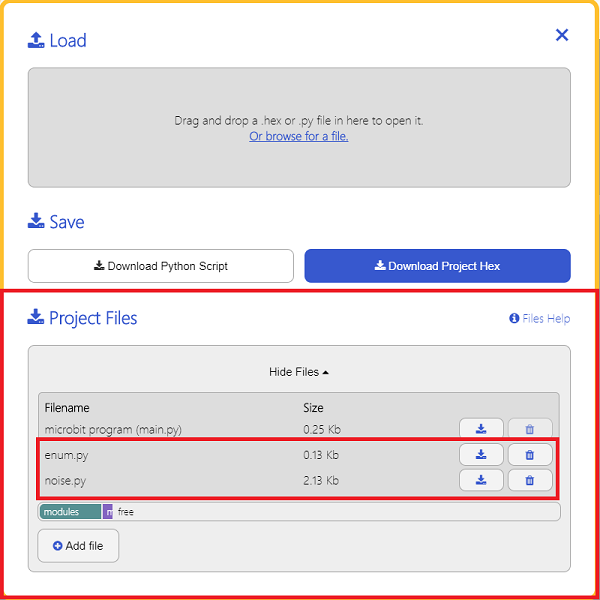
We need to add enum.py and noise.py for programming. Click "Load/Save" and then click "Show Files (1)" to see more choices, click "Add file" to add enum.py and noise.py from the unzipped package of PlanetX_MicroPython.

Step 2
Reference
from microbit import *
from enum import *
from noise import *

while True:
    noise = NOISE(J1)
    noise_value = int(noise.get_noise())
    display.scroll(str(noise_value))
Result
The value of the sound(dB) in the current environment displays on the micro:bit.