
Case 4: Pull-up robot

Case Introduction

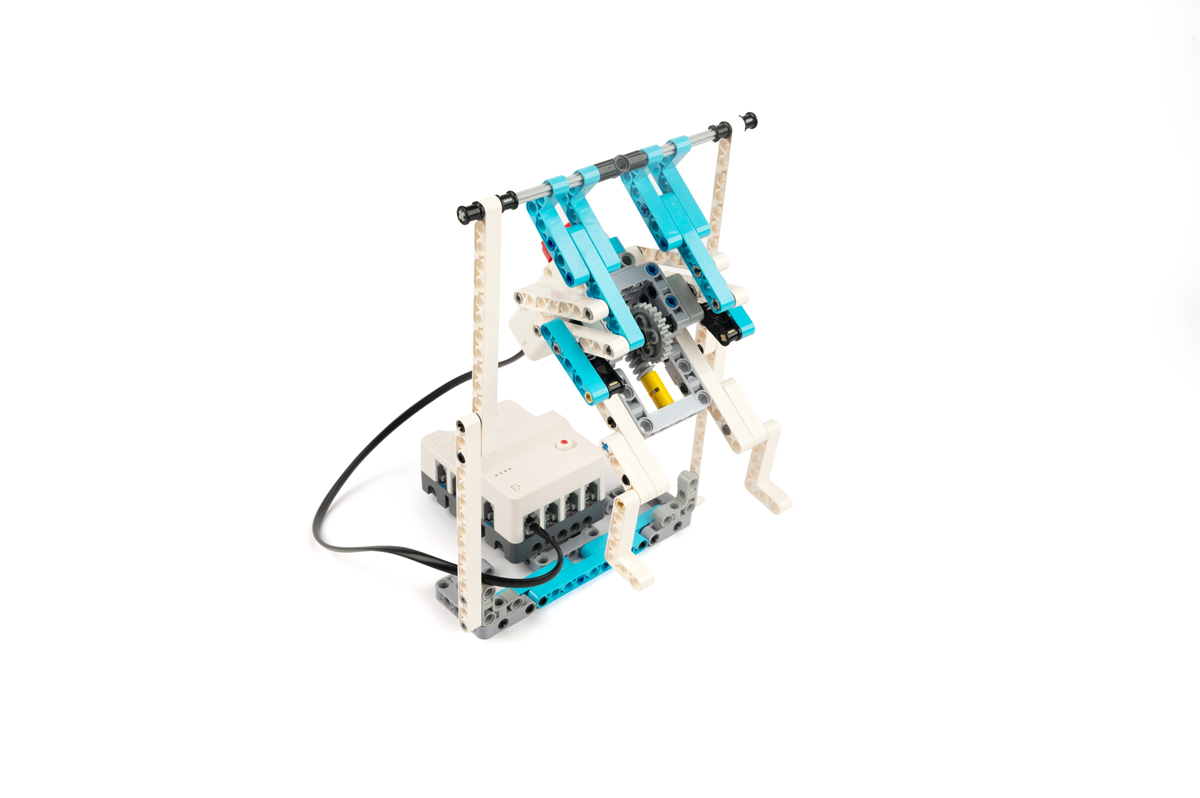
Design a pull-up robot that simulates the pull-up action.

Teaching Preparation

NameGraphic
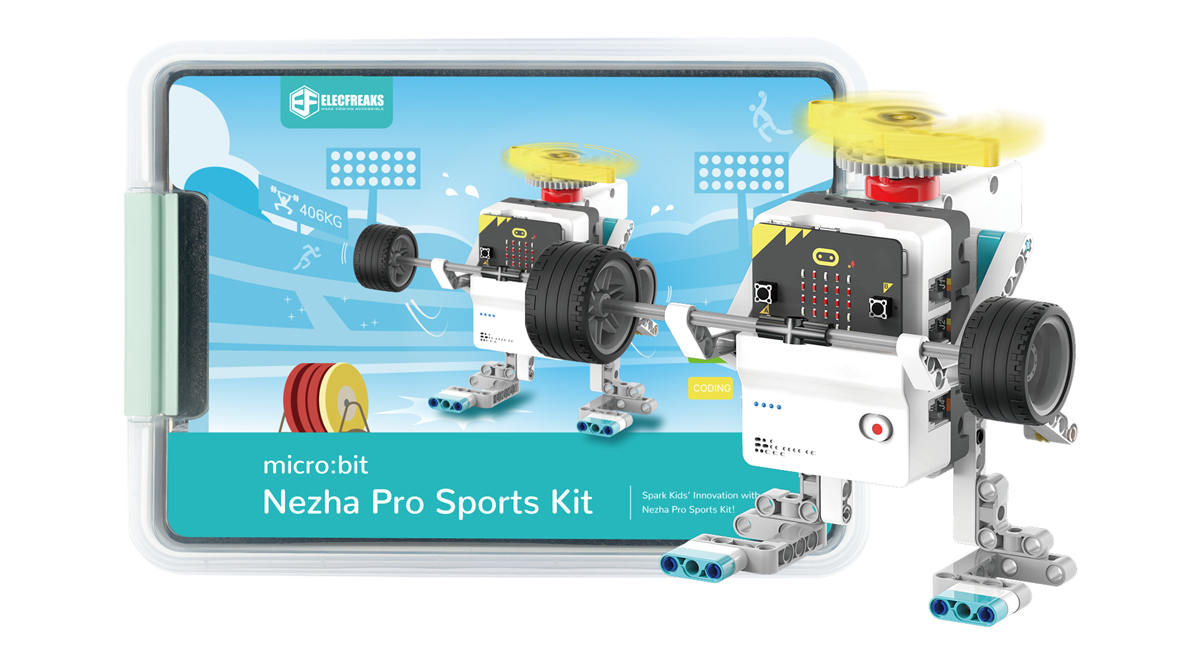
Nezha Pro Sports Package

Teaching Objectives

Understand the characteristics and construction methods of worm gears Inspire interest in engineering and robotics.

Course Introduction

Welcome children to join our wonderful STEAM journey! Today, we will explore how to make a pull-up robot without programming. In this project, we will learn how to control the movement of the robot through simple mechanical transmission. You don't need complex programming knowledge, just assemble and adjust it by hand, and you can create a pull-up robot. Let's start this exciting STEAM learning journey together and stimulate your creativity and problem-solving skills!
Learning Exploration

What are the characteristics of a worm gear?

Build steps

Case Demonstration

Press the button on the Nezha Pro to start the pull-up robot.

Summary and sharing

Extended knowledge

Basic characteristics of worm gear structure Unidirectional transmission (self-locking)

Core features: The worm can drive the worm wheel, but the worm wheel cannot reversely drive the worm (self-locking), which is suitable for scenarios that need to prevent reversal (such as cranes and elevators).

Principle: When the helical lead angle of the worm is less than the friction angle, the reverse transmission is locked by friction.

Exception: Multi-start worms or worms with larger lead angles may lose self-locking.

High reduction ratio and low efficiency

Transmission ratio formula: If the worm is single-start (1 helical tooth), the transmission ratio = the number of worm wheel teeth: 1. For example, the transmission ratio of the Lego worm wheel (24 teeth) is 24:1.

Low efficiency: Due to the sliding friction between the worm and the worm wheel, the energy loss is large (the efficiency is usually less than 50%).

Space staggered axis transmission

The axes of the worm and worm wheel are staggered at 90°, with a compact structure, suitable for vertical power transmission (such as fans and rotating tower models).

Transmission stability

The meshing between the worm and worm wheel is line contact, with less vibration and noise。

Knowledge of Pull-Ups

Project Introduction Pull-ups are an upper-body strength training exercise that uses one's own body weight as resistance. By gripping the bar with both hands, the body is pulled upward until the chin passes over the bar. The core of this movement relies on the coordinated force of the latissimus dorsi, biceps brachii, forearm muscle groups, and core muscles to vertically lift the body. Originating from gymnastics training and military physical fitness tests, it is a classic project for measuring upper-body pulling strength (pull-type strength), widely used in fitness, sports assessments, and competitive sports training. Pull-ups are highly effective for increasing back width, arm strength, core stability, and overall explosive power, making them a golden movement in the bodyweight training system.

Fitness Principles and Benefits

  • Core Muscle Activation
    • Primary Muscles: Latissimus dorsi (determines back width), teres major, rhomboid muscles;
    • Synergistic Muscles: Biceps brachii, brachioradialis, forearm flexors (grip support);
    • Stabilizing Muscles: Core (transversus abdominis, erector spinae) maintains a neutral trunk position to avoid lower back compensation.
  • Functional Improvements
    • Corrects poor postures like rounded shoulders and hunchback, enhances rotator cuff stability;
    • Enhances daily movement abilities (e.g., lifting, climbing) and improves grip strength and upper-limb coordination.
  • Hormone Secretion Promotion
    • Compound movements of large muscle groups stimulate testosterone and growth hormone secretion, increasing overall metabolic rate and muscle synthesis efficiency.

*Basic Training Methods Movement Standards

  • Starting Position: Grasp the bar slightly wider than shoulder-width, hang naturally with the body, retract and depress the scapulae, and tighten the core.
  • Pulling Phase: Inhale, activate the latissimus dorsi to pull the body upward, keep elbows close to the torso, until the chin clears the bar.
  • Lowering Phase: Exhale, control the descent speed and slowly lower the body to full extension, avoiding swinging from momentum.