Case 3: Rope skipping robot

Case Introduction

Design a rope skipping robot to simulate rope skipping movements and understand the characteristics and construction methods of gear transmission.

Teaching Preparation

NameGraphic
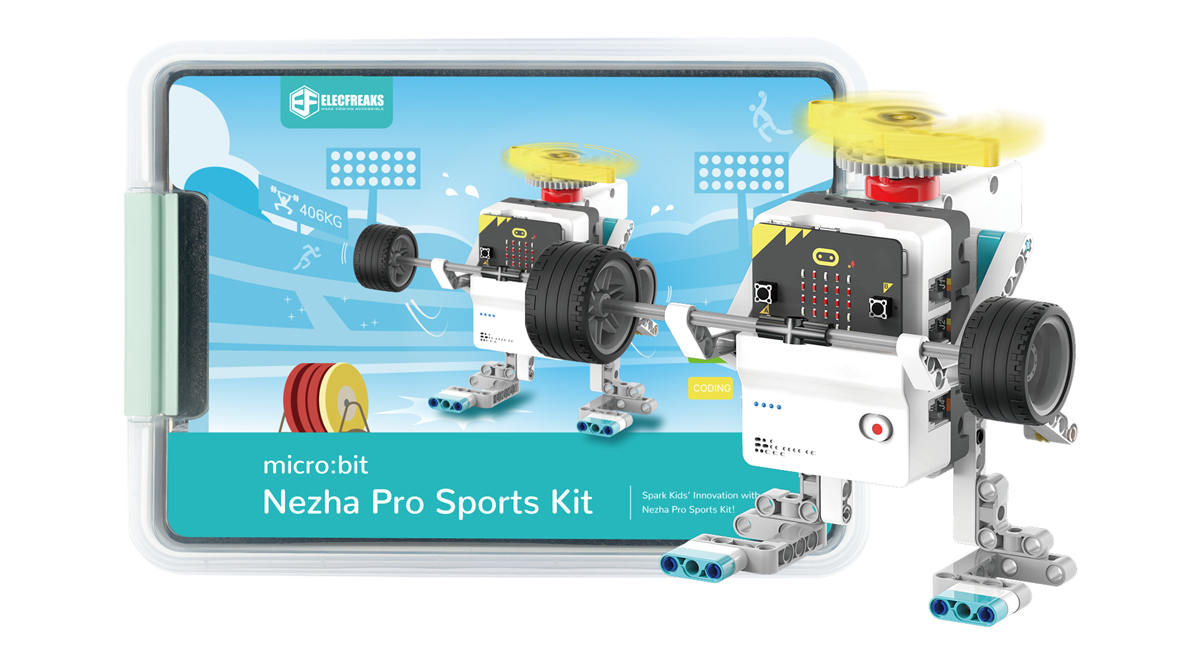
Nezha Pro Sport Kit

Teaching Objectives

Understand the characteristics and construction methods of gear transmission Inspire interest in engineering and robotics.

Course Introduction

Welcome children to join our wonderful STEAM journey! Today, we will explore how to make a rope skipping robot without programming. The core of this project is to use the clever application of gear transmission structure. In this project, we will learn basic mechanical design principles and understand how to control the movement of the robot through simple mechanical transmission. You can create a rope skipping robot without complex programming knowledge, just assembly and adjustment. Let's start this exciting STEAM learning journey together to stimulate your creativity and problem-solving ability!

Learning Exploration

What are the characteristics of gear transmission? How to build a gear transmission.
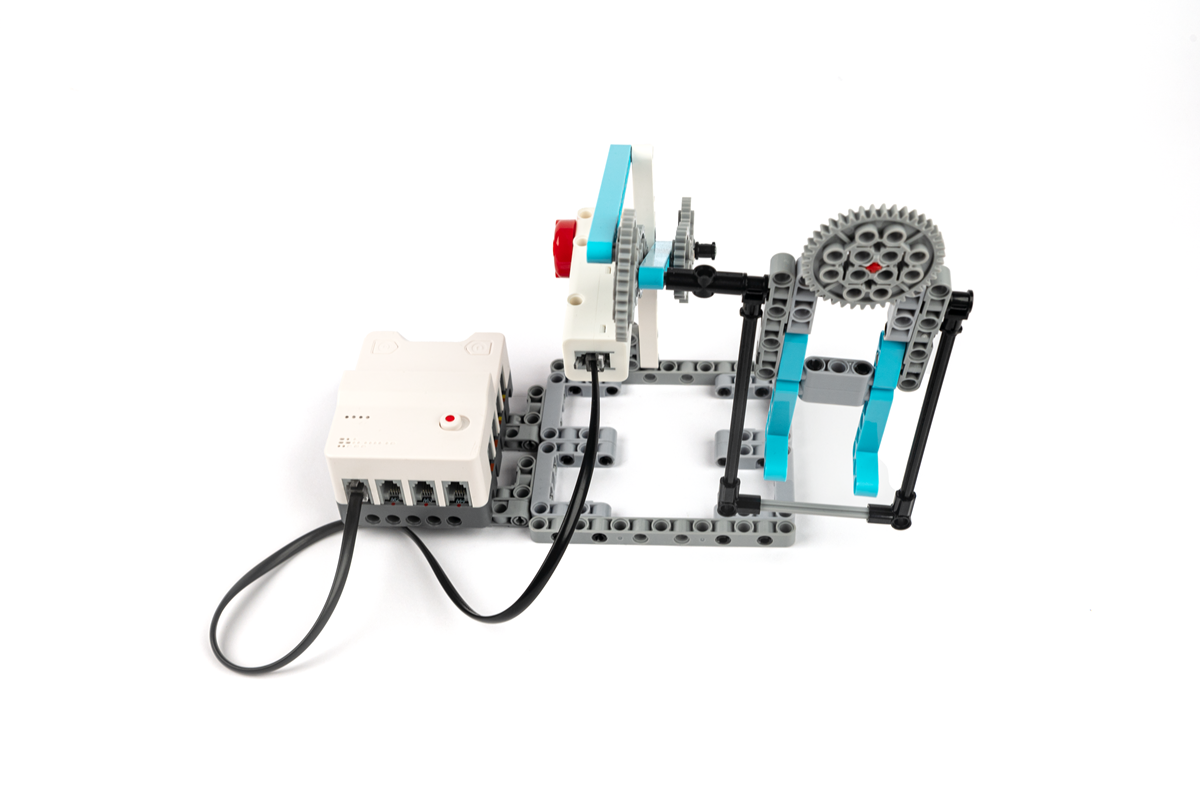
Building steps

Case Demonstration

Press the button on Nezha Pro to make the dancing robot start moving.

Summary and sharing

Extended knowledge

Relationship between transmission ratio and speed

Transmission ratio formula: number of teeth on the driving wheel: number of teeth on the driven wheel. For example, when a 24-tooth gear drives an 8-tooth gear, the speed of the driven wheel is 3 times that of the driving wheel.

Power and torque conversion

When a small gear drives a large gear, the speed decreases but the torque increases (applicable to scenarios that require greater power) When a large gear drives a small gear, the speed increases but the torque decreases (applicable to scenarios that require faster speed)

Knowledge of Rope Skipping

Project Overview Rope skipping is a full-body sport using a single or multiple ropes, involving coordinated hand-foot movements to complete jumping actions. With a long history originating in China, it began as a folk game and fitness activity and has evolved into an important project in competitive sports, mass fitness, and children's physical training. Rope skipping improves physical fitness through repeated jumps, integrating speed, endurance, coordination, and explosive power. It is characterized by simple equipment, flexible venue requirements, and suitability for all ages.

Classification and Forms

  1. By Number of Participants

    • Single Rope Skipping: The most common form, where one person uses a rope to jump independently, including variations like forward skip, backward skip, single-leg skip, and crossed skip.
    • Double Rope Skipping: Two people share one rope, with one or both shaking the rope and jumping in sync (or one shaking and one jumping, known as "carrying").
    • Group Rope Skipping: Involves multiple participants, usually with 2–4 people shaking a large rope while others take turns or jump simultaneously inside, testing teamwork.
  2. By Athletic Goal

    • Speed Rope Skipping: Aims to complete a fixed number of skips in the shortest time (e.g., 30-second or 1-minute sprints), focusing on high frequency and stability.
    • Freestyle Rope Skipping: Combines dance and gymnastic movements, incorporating techniques like double unders (two rope rotations per jump), triple unders, crossed jumps, and rope toss-and-catch, emphasizing creativity and showmanship.
    • Endurance Rope Skipping: Involves continuous jumping for extended periods (e.g., over 30 minutes), focusing on stamina and rhythm control.

Fitness Principles and Benefits

  • Cardiopulmonary Enhancement: Raises heart rate rapidly, strengthening myocardial contraction and lung ventilation to improve cardiovascular health.
  • Full-Body Muscle Training: Lower limbs (calves, thighs, buttocks) power the jumps, core muscles maintain balance, and upper limbs coordinate rope shaking, engaging multiple muscle groups.
  • Coordination and Reaction Speed: Requires synchronized hand-foot-eye cooperation, enhancing physical coordination and neural response over time.
  • Efficient Calorie Burning: Burns 10–15 kcal per minute, more than jogging or walking, making it ideal for fat loss and body shaping.
  • Convenience: Requires no special venue, suitable for quick workouts during fragmented time.

Basic Training Methods

  1. Grip and Rope-Shaking Techniques

    • Grip: Hold the handles with hands slightly narrower than shoulder-width, using wrist发力 (wrist strength) to shake the rope, avoiding excessive arm movement to save energy.
    • Shaking Rhythm: Start slow and maintain a steady pace for beginners, gradually increasing speed or varying rhythm with practice.
  2. Jumping Posture

    • Landing: Touch the ground lightly with the forefoot, knees slightly bent to cushion impact, avoiding direct heel strike to prevent knee injury.
    • Jump Height: Aim for a height of 2–5 cm to let the rope pass under the feet, minimizing energy waste from excessive jumps.
  3. Basic Training Plan

    • Beginners: 5–10 minutes per session, 2–3 sets, focusing on continuous single skips and rhythm control.
    • Advanced Practitioners: Incorporate interval training (e.g., 30 seconds fast skipping + 30 seconds rest), single-leg alternation, and double unders to increase intensity.

Common Techniques and Freestyle Moves

  • Single Under: The basic move (one skip per rope rotation), ideal for warm-ups and endurance training.
  • Double Under: Two rope rotations per jump, requiring fast shaking and explosive power, a core technique in speed skipping.
  • Crossed Arms Skip: Cross hands in front of the chest while shaking, forming an "8" shape as the rope passes underfoot, testing hand coordination.
  • Interactive Rope: Two people shake ropes in opposite directions, with jumpers performing complex moves in the middle, common in group performances.
  • Rope Toss-and-Catch: Toss the rope into the air during a jump and catch it to continue shaking, adding visual appeal.

Major Competitions and Organizations

  • World Rope Skipping Championships: Hosted by the World Jump Rope Federation (WJRF) biennially, covering speed, freestyle, and group events as the highest-level global competition.
  • National Rope Skipping Championships: Organized by China's General Administration of Sport, promoting the popularization and competitive level of rope skipping in China.
  • Commercial Events and Performances: Including challenge matches, parent-child activities, and TV show record attempts, enhancing the sport's popularity and entertainment value.

Equipment Selection and Precautions

  1. Rope Selection

    • Material: Steel ropes for speed skipping (lightweight, fast); cotton or plastic ropes for freestyle (easier to control, suitable for performances).
    • Length: Step on the rope's midpoint, pull handles to the armpits—trim if too long to avoid tangling.
    • Handles: Choose non-slip, lightweight materials (e.g., rubber, plastic) for blister-free long-term use.
  2. Venue and Attire

    • Venue: Opt for flat, non-slip surfaces (e.g., rubber tracks, wooden floors); avoid prolonged jumping on hard ground (concrete) to reduce joint strain.
    • Clothing: Wear lightweight sneakers (with good cushioning) and breathable apparel; avoid loose clothes that may catch the rope.
  3. Safety Tips

    • Warm-Up: 5–10 minutes of warm-up (e.g., high knees, lunges) to activate wrists, ankles, and knees.
    • Intensity Control: Gradually increase difficulty for beginners to prevent muscle soreness or strains.
    • Post-Workout Stretching: Stretch calves, thighs, shoulders, and back to maintain muscle elasticity.
    • Special Populations: Consult a doctor before exercising if with knee/ankle injuries or cardiovascular conditions.

World Records and Challenges

  • Speed Skipping: 30-second record: 228 skips (Cen Xiaolin, China, 2021); 1-minute record: 314 skips (Sorato Anraku, Japan, 2023).
  • Endurance Skipping: Over 140,000 skips in 24 hours, requiring extreme stamina and willpower.
  • Freestyle Skipping: Challenges technical limits with moves like triple unders and mid-air spins, often seen in international competitions and shows.